Dry needling involves insertion of acupuncture needles into knots and trigger points in muscles. It is often used to relieve muscle tension and pain in TMJ dysfunction, targeting trigger points in jaw, neck, and facial muscles. When the needle is inserted into these points, it causes a reflex relaxation of the surrounding muscle, turning off painful trigger points, restoring muscle function and increasing blood flow. This aids in restoring pain free movement of the jaw.

What to Expect During Treatment
The treatment itself is short lived, with the needles only needing to be in place for a few minutes. While there is a degree of discomfort associated with the treatment, it is nothing like getting a regular injection and most people are pleasantly surprised that it is not nearly as uncomfortable as they expected.
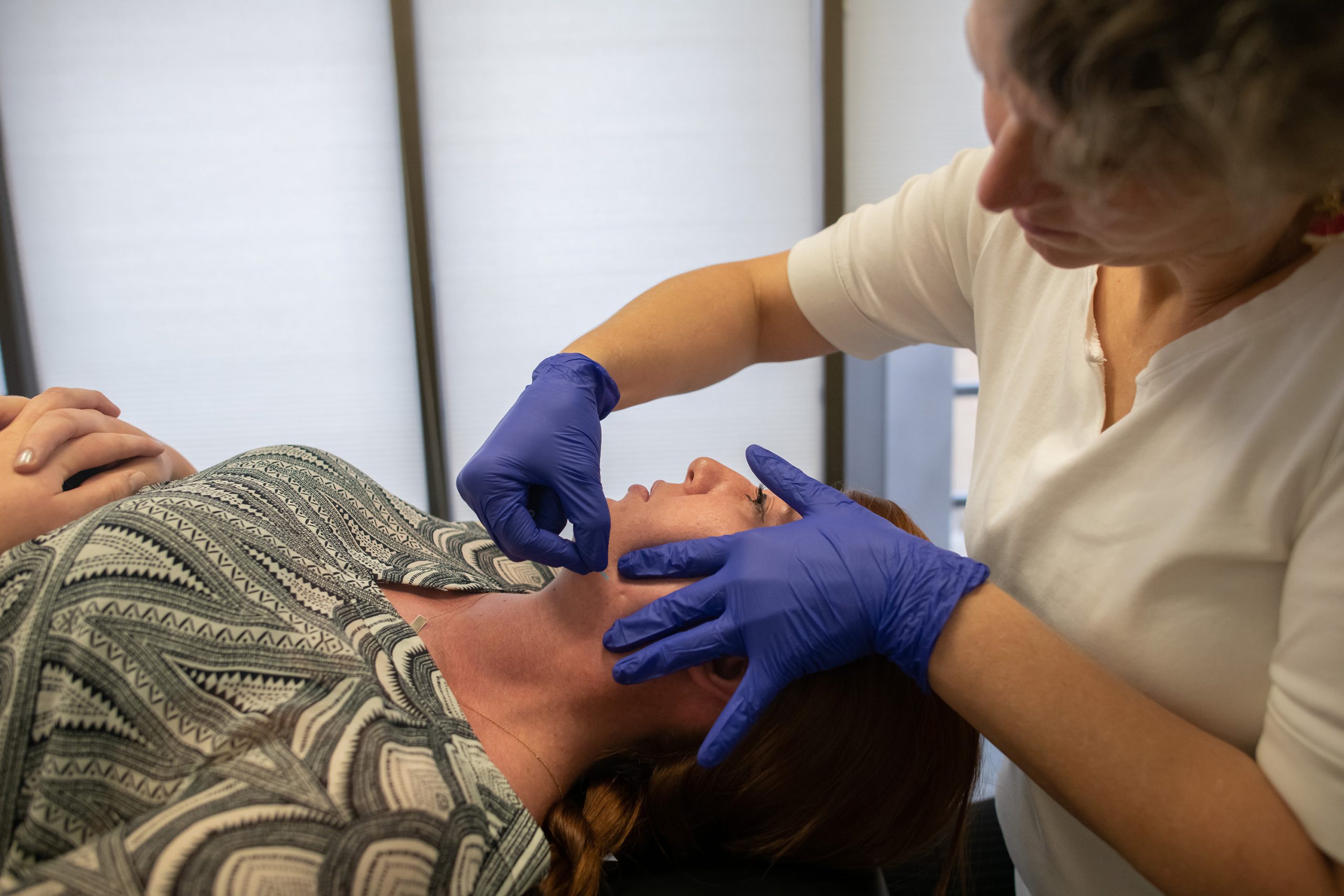
While quite an effective treatment, it should be applied in conjunction with other modalities like massage, joint mobilisations and exercise to be maximally effective. Much as with many other treatments, there can be a degree of tissue soreness after the treatment, however movement of the jaw should feel better, not more painful.
Who Can Benefit from TMJ Dry Needling
TMJ dry needling can be used effectively in any clients with pain arising from the muscles around the jaw. Typically, these muscles will tend to be sore and tight because of clenching and or grinding the teeth in response to stress. Often overwork to the muscles of the jaw from clenching and grinding can also result in tightness of the muscles in the top of the neck. This can result in local neck pain and headaches, which can also be treated quite effectively with dry needling.
Safety and Side Effects
As with any treatment, there are of course risks with dry needling if not conducted in a safe and hygienic manner. These risks should be extremely low when treatment is undertaken by a trained physiotherapist, with knowledge of the anatomy of the region and an understanding of sterile treatment principles.
Stop putting up with jaw pain and headaches related to clenching and grinding. Book an appointment today with one of our expert TMJ physios and find out if dry needling can help you!
Article by Jim Burke





