In today’s digital age, many of us spend extended hours in front of a computer or on devices, leading to an increase in neck pain and discomfort. As physiotherapists, we see countless patients suffering from neck pain due to poor desk ergonomics and unhealthy habits. Here are five top tips to help you avoid neck pain and maintain a healthy posture while working at your desk.

1. Optimise Your Workspace Ergonomics
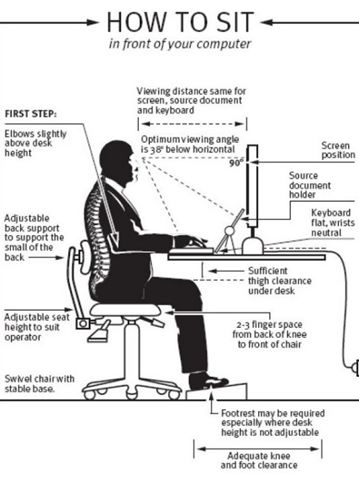
The first step in preventing neck pain is ensuring that your workspace is ergonomically friendly. This involves arranging your desk, chair, and computer in a way that promotes a neutral and comfortable posture.
Chair: Choose a chair with good lumbar support. Adjust the chair height so that your feet are flat on the floor and your knees are at a 90-degree angle.
Desk: Your desk should be at a height where your elbows are at a 90-degree angle when typing. Avoid desks that are too high or too low.
Monitor: Place your computer monitor at eye level, about an arm’s length away. This prevents you from tilting your head up or down, which can strain your neck muscles.
2. Take Regular Breaks
Sitting in one position for prolonged periods can lead to muscle stiffness and discomfort. Our bodies are not really designed for long periods of sitting, so to combat this, make it a habit to take regular breaks. In recent years new research has compared the negative health impacts of sitting all day to being like being a light smoker. Take microbreaks every 30 mins to stretch and move around. Even a brief 1-2 minute break can make a significant difference to more than just your neck pain!
3. Do Some Stretches at Your Desk
Incorporating specific stretches and exercises into your daily routine can help alleviate neck tension and improve flexibility. Here are a few effective ones:
Chin Tucks: Sit or stand up straight. Slowly tuck your chin towards your chest, feeling a gentle stretch at the back of your neck. Hold for 5-10 seconds and repeat 10 times.
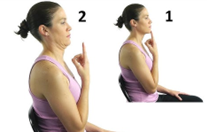
Neck Stretch: Drop your head forward and to one side. Place your hand on the top of your head to gently increase the stretch. Hold for 20 sec and to 2 each side.

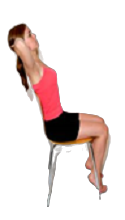
Back Extensions: Place your hands at the back of your head and lean backwards over the top of your chair to gently stretch the midback. Hold for 20 sec and repeat 2-3 times
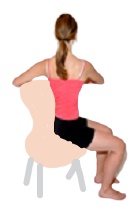
Spine Twist: Sitting in your chair, twist around as far as you are comfortable to. Grab the back of the chair to gently increase the stretch. Hold 20 sec and do 2 each side.
4. Maintain Good Posture
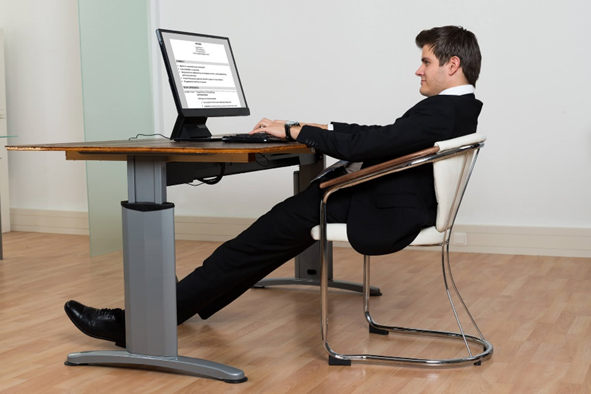
Awareness of your posture is crucial in preventing neck pain. Here are some tips to help you maintain a good posture at your desk:
Sit Upright: Sit with your back straight and shoulders relaxed but not slouched. Keep your head aligned with your spine.
Feet Flat: Ensure your feet are flat on the floor, and avoid crossing your legs as it can lead to an imbalance in your posture.
Keyboard and Mouse Position: Place your keyboard and mouse close enough so that you don’t have to stretch your arms to reach them. Your wrists should be in a neutral position, not bent up or down.
Move: Most of us will sit in a good position when we first sit at the desk and our posture deteriorates the longer we are seated. Another great reason to take microbreaks regularly and get up and move.
5. Use a Standing Desk
Our bodies are not meant for sitting still all day. Incorporating a standing desk into your workstation can provide a significant relief to neck pain. Alternating between sitting and standing throughout the day promotes better posture and reduces the strain on your neck muscles.
By optimising ergonomics, taking regular breaks, performing neck stretches, maintaining good posture, and incorporating a standing desk, you can significantly reduce your risk of developing neck pain while working at your desk. These tips, grounded in physiotherapy principles, are designed to help you maintain a comfortable and pain-free working environment. Remember, small changes can make a big difference in your overall well-being. Take care of your neck, and it will take care of you.

If you have followed these steps and are still struggling with neck pain, consult a qualified physiotherapist for treatment and advice on management.
Article by Jim Burke





